

Colouring pages often come out when a teacher needs a quiet room, or when a parent needs another half hour to work. That is fine. But add two or three questions and one small rule, and the same page becomes an art lesson, a language lesson and hand practice at the same time, in the same amount of time.
This article is for teachers from kindergarten to Grade 3, and for parents of children that age. It starts with what colouring actually helps children practise, moves on to choosing pages that suit a child's hand, and then gives three lessons you can run from a single colouring page.
What colouring helps children practise
Colouring keeps the hands and eyes working together for several minutes at a stretch. These are the things a teacher can see by watching children in class.
- Small muscles in the fingers and wrist: keeping colour inside small spaces practises the same finger control a child needs for writing.
- Pencil grip: many young children still hold a crayon in their fist. Regular colouring is a chance to nudge them towards holding it with the thumb, index and middle fingers, without waiting for handwriting lessons.
- Finishing a task: a colouring page has a clear start and a visible end, which helps children practise keeping going until something is done, a foundation for concentration in lessons.
- Making decisions: every space is a choice of colour. Children who rarely speak up often have their own reasons when asked why they chose a colour.
These are things colouring helps children practise, not guaranteed results. Like any skill, it needs regular practice, and children develop at different rates. If a child finds holding a crayon very hard, tires unusually quickly or cannot manage even very simple pictures, talk to the class teacher or a specialist rather than simply giving more colouring.
Match the page to the hand, not the age
A page that is too hard for a child's hand ends with scribbles across the whole sheet and a child who gives up. Adults often read this as not trying, but the child is really saying the spaces are too small to control. A simple rule: a child who still grips in a fist needs big pictures, thick lines, wide spaces and chunky crayons. Once a child holds a pencil comfortably, move on to more detailed pictures and coloured pencils.
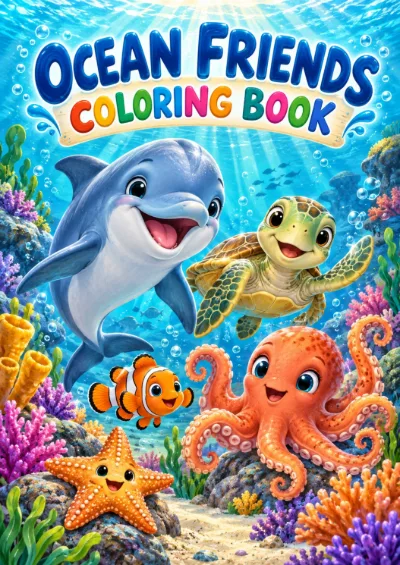
For example, the first page of the Ocean Friends colouring book shows a large dolphin leaping over the waves, a sun, a sailing boat, three fish and two shells. The big parts, such as the dolphin and the sun, suit small hands, while the stripes on the fish and the ridges on the shells suit children with better control. One page works for both levels; just tell each group where to start.
Lesson 1: Three primary colours
In the Thai primary art curriculum, children learn that the three primary colours are red, yellow and blue, and that mixing two primary colours gives the secondary colours orange, green and purple. To make this concrete, give one rule: colour this page using only three colours, red, yellow and blue.
When a child wants an orange fish or green seaweed, they have to colour one colour lightly and layer the other on top, such as yellow then red for orange. Coloured pencils show the effect more clearly than wax crayons, and the result will not be as bright as a colour from the box. That is useful, because it opens the question of why a mixed colour looks different. If you have watercolours, mix the same pairs on a palette to compare.
After colouring, the Grade 1 AR set "Colours and mixing" checks understanding straight away, because it asks the same things: how many primary colours there are, what red and yellow make, and what yellow and blue make.
Lesson 2: One page, two feelings
Hand out two copies of the same page. Colour the first in warm colours, red, orange and yellow, and the second in cool colours, blue, green and purple. Put them side by side and ask which one looks like a hot afternoon and which one feels calmer. Children see for themselves that the same picture can feel different because of colour alone.
The Grade 1 AR set "Warm and cool colours, tools and instruments" has a question asking children to sort red, orange, blue and green into warm and cool, which makes a good follow-up. For Grade 2, extend this to tone: colour with one colour, pressing lightly in one area and firmly in another, and see whether the picture gains depth.
Lesson 3: Talk about the picture, in Thai or English
While children colour, walk round and ask about the picture, not about whether the colouring is neat. In Thai, use open questions: where is this fish going, whose boat is this, if you were in this picture, where would you be? In English, use the short sentence patterns Grade 1 to 3 children already know.
- What colour is the dolphin? It's blue.
- How many fish? Three fish.
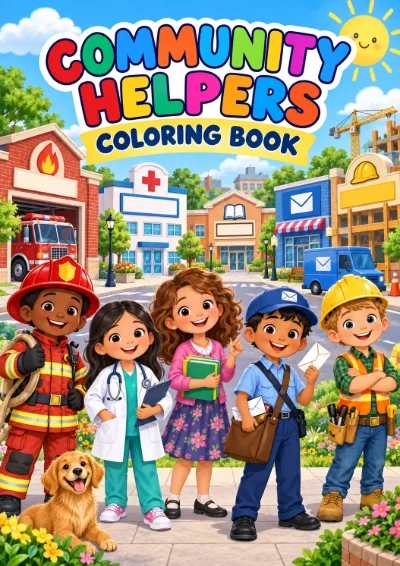
- What is he? He is a firefighter. Use this with the page in the Community Helpers colouring book showing a firefighter spraying water in front of a fire engine.
- I like red. I don't like brown. Let children talk about the colours they chose.
If a child colours the dolphin pink, do not correct it. Ask why they chose that colour and accept the answer. The Grade 1 AR set "Appreciating art" asks whether good art always has to look real, and the answer is no. A teacher who accepts unrealistic colours gets more explanation from children than one who says dolphins must be blue. If the class still needs colour words, the colour matching worksheet works well before this lesson.
A few cautions
A colouring page is lines someone else drew, so it should not replace children's own drawing. Each time you use one, leave room for children to add to it, such as drawing a fourth fish or drawing themselves into the scene. Also avoid using colouring as a reward or a punishment, because children start to see it as something outside learning. And do not judge the work only on going over the lines: a child who goes over the lines but chooses colours for a reason is learning too.
For parents at home
Colouring side by side, a page each, is the simplest approach. Your child sees an adult choosing colours and talking about them, which teaches vocabulary without any formal teaching. When you praise, praise the choice, such as "I like the orange you used for the sun", rather than "so pretty". Write the date in the corner and keep the pages in a folder. After two or three months, look through them together, and your child will see how much better their hand controls the colour.
Worksheets from this article
Grades 1–3 (P.1–P.3)
Ocean Friends - Colouring Book (30 pages)
Grades 1–3 (P.1–P.3)
Community Helpers - Colouring Book (30 pages)
Grades 1–3 (P.1–P.3)
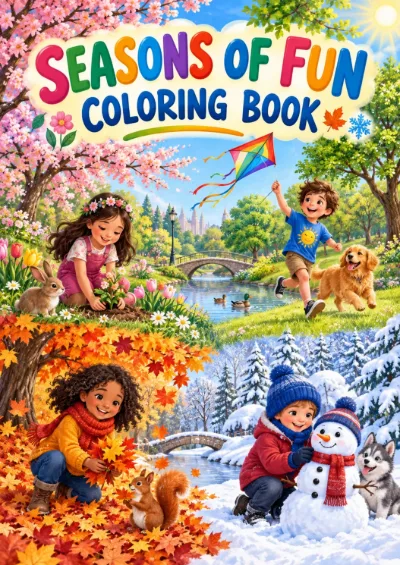
Seasons of Fun - Colouring Book (40 pages)
Grades 1–3 (P.1–P.3)
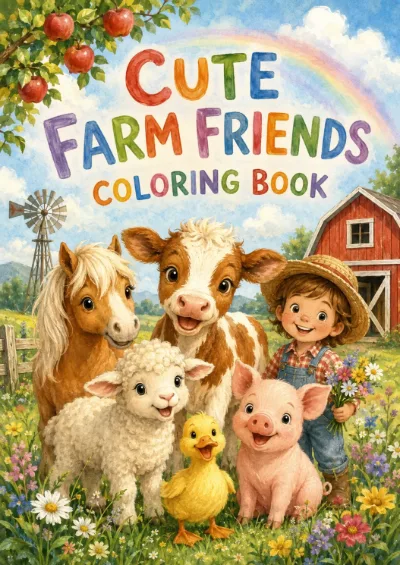
Cute Farm Friends - Colouring Book (30 pages)
Grades 1–3 (P.1–P.3)