
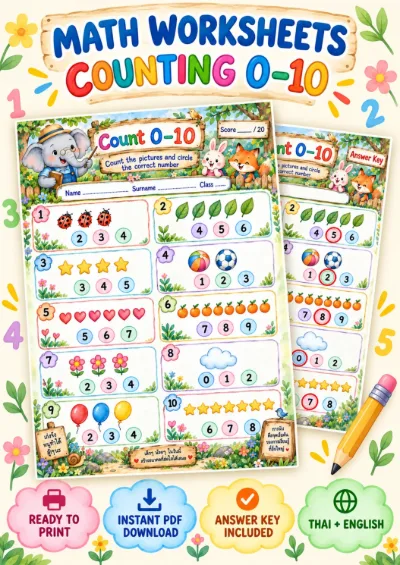
Grades 1–3 (P.1–P.3)
Count 0-10 - Count and Circle
19 Baht
View detailsMathematics
An AR classroom game for Grade 3. Learners can aim with their hands at the camera or play by tapping the screen.
This set has 4 rounds in an interactive matching activity.
Curriculum indicatorค 2.1 ป.3/5
A look before you play
A few real prompts from the game to help you choose an activity for your class.
Metric units convert by multiplying or dividing by ten, a hundred or a thousand.
Choose a unit that fits the size of what you are measuring.
Units of time are unlike metric units - they do not convert in tens.
Before you play
Know how measurement units relate: metres and centimetres, kilograms and grams, litres and millilitres, kilometres and metres (indicators ค 2.1 ป.3/5 and ป.3/9), choose a suitable unit, and recall units of time.
4 matching questions - 1 m = 100 cm, 1 kg = 1000 g, 1 litre = 1000 ml, 1 km = 1000 m - The distance to school with kilometres, the weight of one biscuit with grams - 1 day = 24 hours, 1 year = 12 months - 3 × 6 = 18 and 4 × 9 = 36
Use to close the measurement unit, about 6 minutes, team mode. - In Q1 three pairs are 1000 but 1 metre is 100; after revealing, build a unit table on the board for pupils to copy - For time, point out that it does not convert in tens, hundreds and thousands like the other units - Q4 is times tables, not measurement - Play it linked to the class to record results in the mark book
- Matching 1 metre to 1000 cm and 1 km to 100 m by swapping the numbers. Point to a metre stick with its 100 centimetre marks - Matching the distance to school to centimetres or metres, since some pupils live close by. Hear their reasons and explain that road distances are usually given in kilometres - 1 kg, 1 litre and 1 km all convert to 1000, so pupils who look only at the number swap them. Remind them to read the unit on the right-hand card
Grades 1–3 (P.1–P.3)
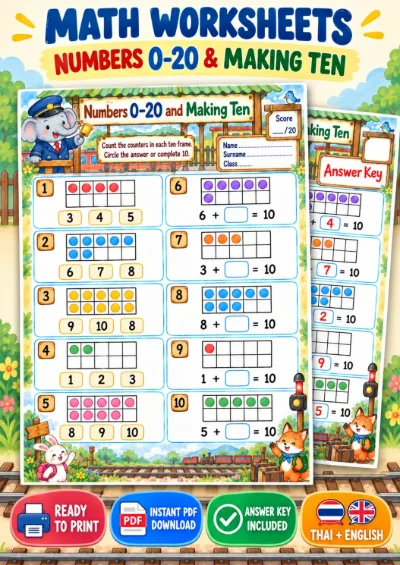
Grades 1–3 (P.1–P.3)
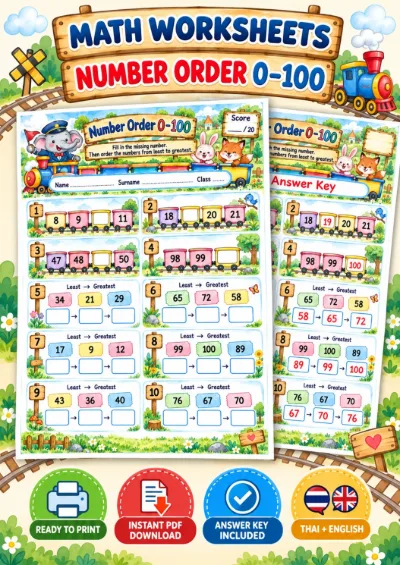
Grades 1–3 (P.1–P.3)
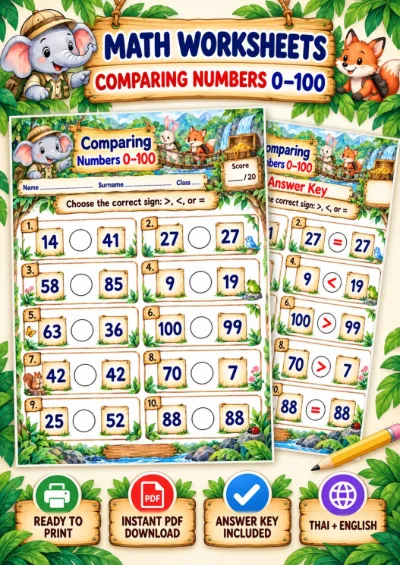
Grades 1–3 (P.1–P.3)
 Multiple choice
MathematicsGrade 16 questions
 Multiple choice
MathematicsGrade 16 questions
 Ordering
MathematicsGrade 14 rounds
 Sorting
MathematicsGrade 14 rounds