
Grades 1–3 (P.1–P.3)
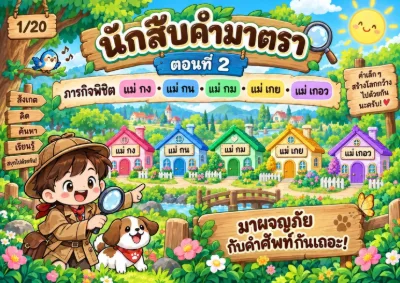
Word Detective Part 2 - Final Consonants Kong, Kon, Kom, Koei, Keo (Teaching Media)
29 Baht
View details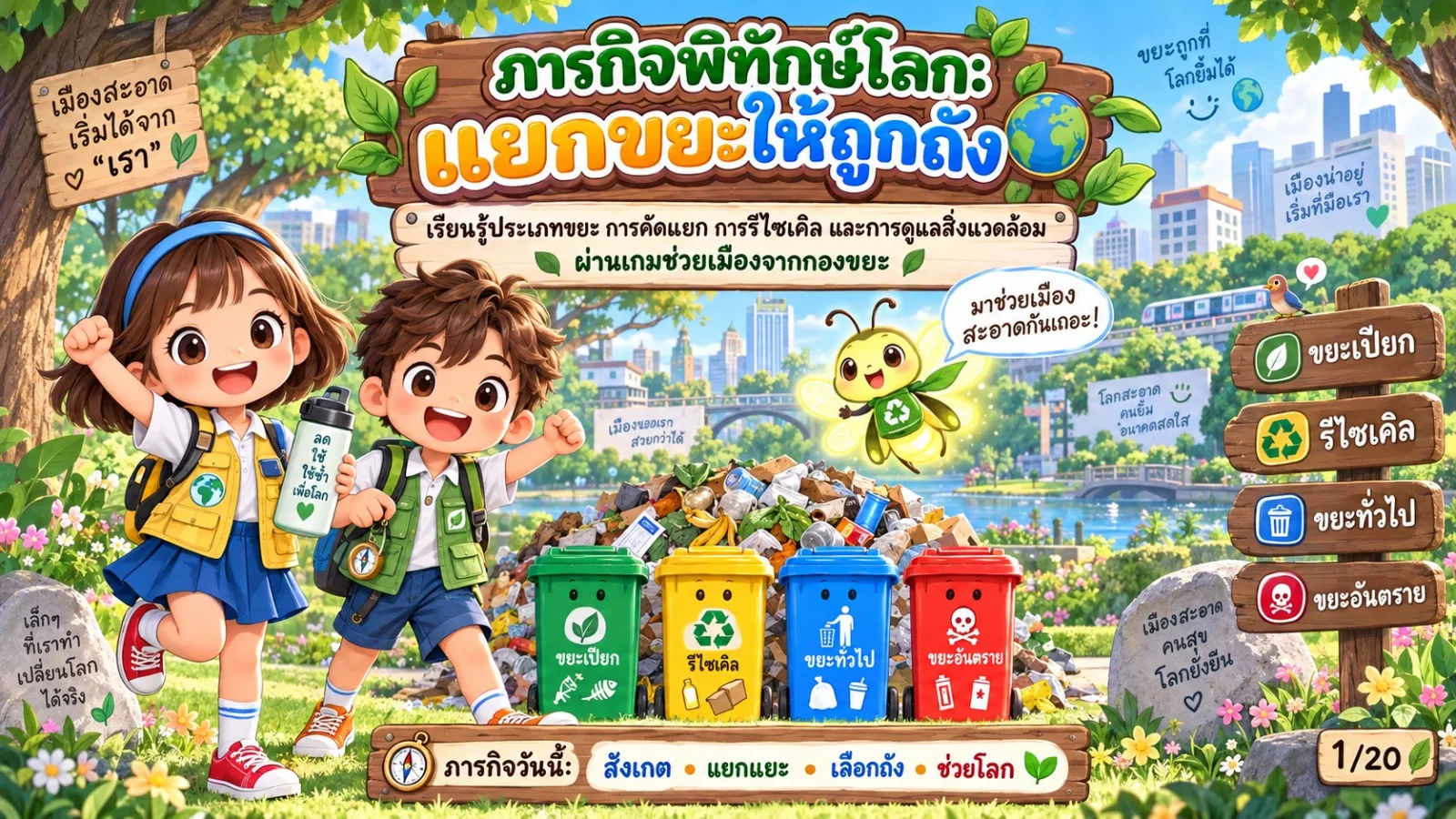
1 / 6
The preview is watermarked and lower resolution than the file you receive.
The preview is watermarked and lower resolution than the file you receive.
Science Teaching Media worksheets on Sorting Waste and Recycling for Grades 1–3 (P.1–P.3), difficulty 1/5. PDF, downloadable as soon as payment clears.
Curriculum indicators practised
Before you begin
Learn the four Thai waste types by bin colour, wet waste (green), recyclables (yellow), general waste (blue) and hazardous waste (red), sort items into the right bin, prepare waste before throwing it away, and know how to reduce, reuse and recycle.
20 slides in which two children and a firefly save a town from a rubbish heap - Slides 1-3: what waste is, why we sort it (a clean town, fewer smells and germs, things can be used again), and the four coloured bins - Slides 4-7, one bin each: wet waste (food scraps, fruit peel, vegetable scraps, leaves; can become compost), recyclables (plastic bottles, paper, cans, glass bottles), general waste (dirty snack bags, food-stained foam, dirty plastic bags, used tissues) and hazardous waste (batteries, light bulbs, spray cans; never mixed with general waste) - Slides 8-14, how to do it: four steps before binning (empty, rinse, squash or fold, choose the right bin), where recycling goes (bottles to T-shirts, paper to notebooks), an eight-item sorting game, match waste to bins, what can be recycled, reduce, reuse, recycle, and a town that does not sort versus one that does - Slides 15-20: five ways to help, a clean-home mission, a summary, a four-question review, a five-question final mission and a certificate - No separate answer slides, but slides 11, 12, 18 and 19 already show the answers
Use with Years 1-3 in an environment unit over two lessons of about 30-40 minutes (slides 1-9 learning the waste types, 10-20 sorting practice and review). - Before slide 10 bring in clean real waste such as a bottle, a can and a snack bag (use pictures, not real batteries or bulbs) and let children drop each into four coloured boxes, then check with the slide - Afterwards set the sorting waste worksheet, and have each child pick one action from slide 15 to try at home and report back
- Putting bottles or cans still holding liquid or food into the recycling bin without emptying and rinsing them (slides 5 and 8 teach this step) - Thinking all plastic is recyclable, so dirty plastic bags or food-stained foam go in the yellow bin (slide 12 and question 4 on slide 18) - Throwing batteries or bulbs in with general waste because they are small and do not look dangerous - Mixing up the bin colours, especially green and yellow
A PDF written to the Thai curriculum. Buy this worksheet once and keep it; no monthly plan is required.
Download it as soon as payment clears. The link stays in your account, so you can fetch the file again whenever you need it.
Every worksheet is checked before it is published — the content, the artwork, the layout and the accuracy of the language. Download it and hand it out the same day. If printing it yourself is inconvenient, add printing and postage to the order.
By a teacher who works in Thai classrooms, for Grades 1 to 6.
Choose plain A4, heavier stock or photo paper, and we deliver it.
Grades 1–3 (P.1–P.3)

Grades 1–3 (P.1–P.3)

Grades 1–3 (P.1–P.3)

Grades 1–3 (P.1–P.3)