
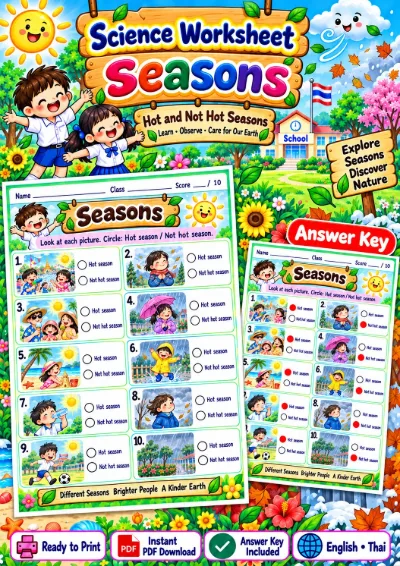
Grades 4–6 (P.4–P.6)
Seasons - Circle the Answer
19 Baht
View detailsScience
An AR classroom game for Grade 6. Learners can aim with their hands at the camera or play by tapping the screen.
This set has 4 rounds in an interactive sorting activity.
Curriculum indicatorว 2.3 ป.6/5
A look before you play
A few real prompts from the game to help you choose an activity for your class.
Sort into
Some traits are inherited; others come from practice.
Sort into
A series circuit has one path; a parallel circuit has several.
Sort into
Clean energy gives off no pollution while generating electricity.
Before you play
Sorts four Grade 6 topics: inherited versus practised traits, series versus parallel circuits, clean versus polluting energy, and sedimentary versus metamorphic rock. Question 2 matches indicator ว 2.3 ป.6/5 (bulbs in series and parallel), and question 4 links to ว 3.2 ป.6/1 (how the three rock types form).
4 questions, a sorting game with four items each - Eye colour and dimples are inherited; playing the piano and speaking English are learned - Bulbs one after another, and all go out when one fails, are series; separate paths, and the rest stay lit, are parallel - Sunlight and wind are clean; coal and diesel pollute - Sandstone and shale are sedimentary; marble and slate are metamorphic
An end-of-Grade-6 review before O-NET, about 6-8 minutes in teams. For question 2, draw both circuits on the board and have teams rub out one bulb to see whether the current path is still complete. For question 4, pass round the school's rock samples if it has a set. Question 1 leads into homework comparing their own traits with their parents'. You can link it to a class and record it in the gradebook.
- Question 4: swapping slate and shale, as both are flat and layered. Explain that slate forms from shale under heat and pressure. - Question 1: calling speaking English inherited because fluent parents have fluent children. Separate upbringing from genes. - Question 2: putting bulbs on separate paths with series because separate sounds like broken.
Grades 4–6 (P.4–P.6)
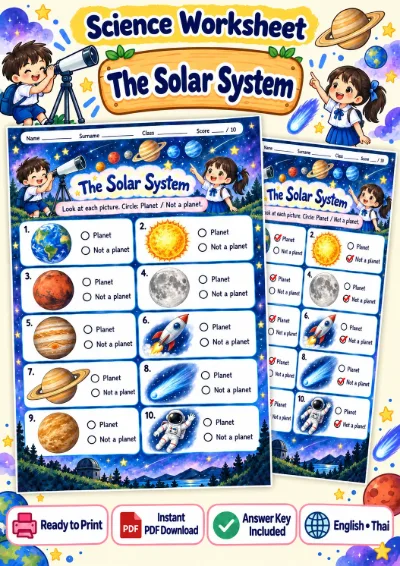
Grades 4–6 (P.4–P.6)
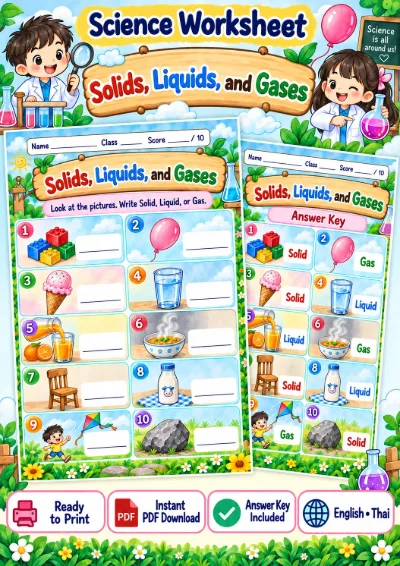
Grades 4–6 (P.4–P.6)
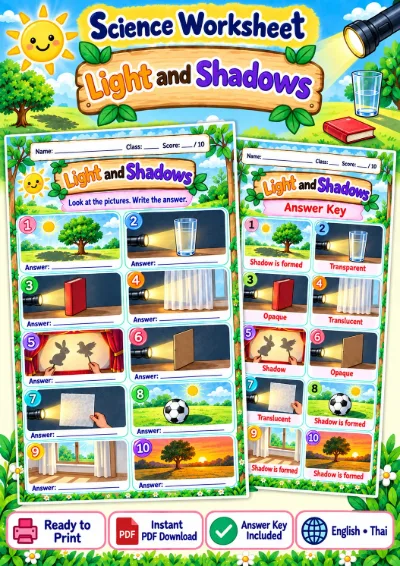
Grades 4–6 (P.4–P.6)
 Sorting
ScienceGrade 14 rounds
 Matching
ScienceGrade 14 rounds
 Multiple choice
ScienceGrade 16 questions
 Multiple choice
ScienceGrade 16 questions