

The body parts topic beats every other vocabulary set on one simple count: the teaching material walks into the room attached to the children. Nothing to print, no cards to hunt down. You also have a legendary song on your side, Head, Shoulders, Knees and Toes, which half your class can already sing. Your job is to turn a sing along into vocabulary they can actually use.
From Song to Vocabulary: Sing, Touch, Then Read
Round one is the song as usual, singing and touching. In round two, stop the music partway through, point at a body part, and let the class shout the name. In round three, hold up a word card with no picture on it: they read the word, then touch that part. That sequence carries children from a tune in their ears to reading a word on its own, and it takes about 15 minutes.

The Words Worth Covering
- Straight from the song: head, shoulders, knees, toes, eyes, ears, mouth, nose
- Common additions: hand, arm, leg, foot, hair, face
- Grade 3 extensions: finger, teeth, tongue, plus a first look at irregular plurals, since foot becomes feet and tooth becomes teeth
A Simon Says That Actually Measures Something
The classic Simon says touch your nose has one trap teachers keep falling into: play it too fast and the children are simply copying whoever moves first. Run a round with everyone's eyes closed and you'll see immediately who understands the words and who has been watching their friends. Then record the result on a worksheet that asks them to match each word to a picture. A child who passes the listening round and the paper is a child who has really got it.
Worksheets from this article
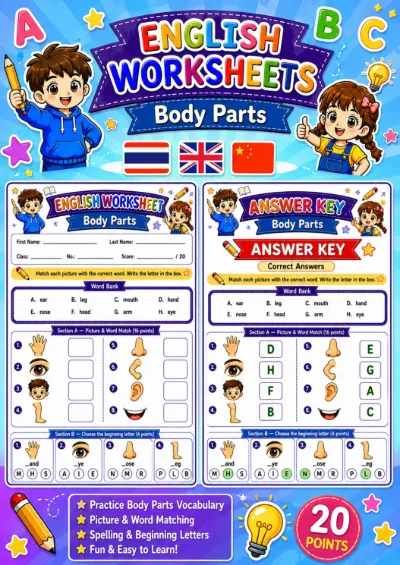
Grades 1–3 (P.1–P.3)
Body Parts - Match the Pictures and Words
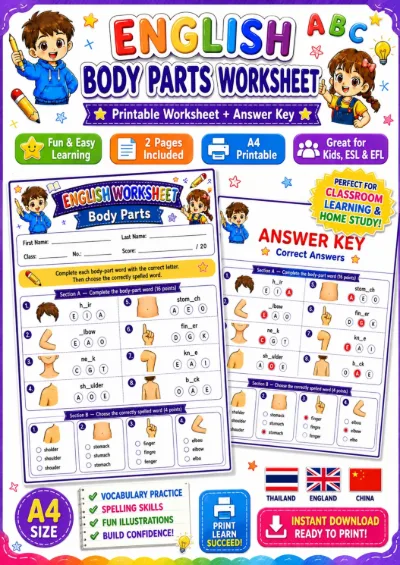
Grades 1–3 (P.1–P.3)
Body Parts - Spell the Body Part Words
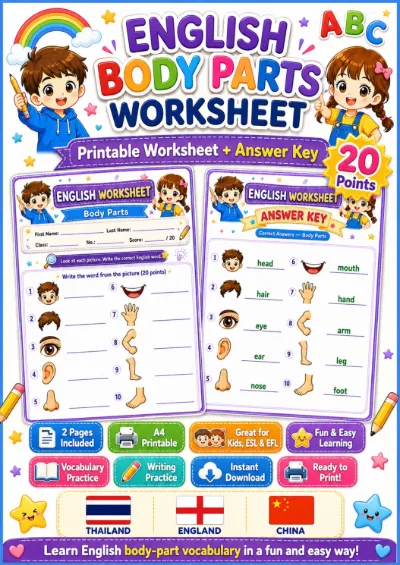
Grades 1–3 (P.1–P.3)