
Grades 1–3 (P.1–P.3)
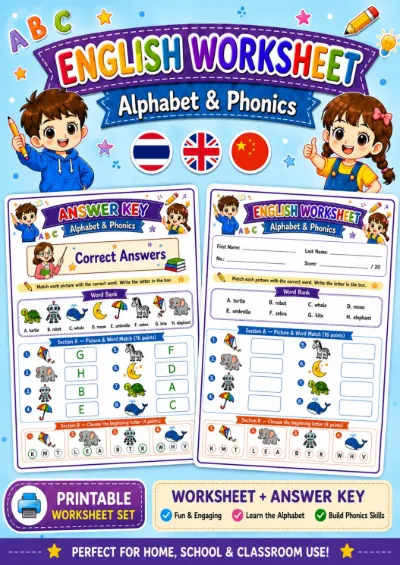
Alphabet & Phonics - Picture and Word Match
19 Baht
View detailsEnglish
An AR classroom game for Grade 3. Learners can aim with their hands at the camera or play by tapping the screen.
This set has 6 questions in an interactive multiple choice activity.
Curriculum indicatorต 1.2 ป.3/2
A look before you play
A few real prompts from the game to help you choose an activity for your class.
"May" asks permission politely.
"Can you" asks for help.
"Please" can go at either end of the sentence.
Before you play
Use May I ...? and Can you ...? to ask permission and help politely, use please and Thank you, and reply Yes, you may. (indicator ต 1.2 ป.3/2 on commands and requests).
6 questions, multiple choice with 3 options - ___ I go to the toilet? Answer: May - ___ you help me, please? Answer: Can - Someone has helped you. What do you say? Answer: Thank you. - How do you say yes to May I? Answer: Yes, you may.
Best early in the year so children start using the phrases for real; about 5 minutes, solo. Then agree that for the rest of term they say May I go to the toilet? before leaving the room. - After Q6, pairs role-play: one asks to borrow a pencil, the other answers Yes, you may. - Play it linked to your class so scores go into the gradebook
- Saying yes to May I (Q6): choosing Yes, I do. from Do you ...? habits. Answer with the word in the question: May ... may - ___ I borrow your pen? (Q5): choosing Do, since Do I ...? sounds like a question. Point out it is a request to borrow - ___ you help me, please? (Q2): choosing Do, not separating a request from a question about facts
Grades 1–3 (P.1–P.3)
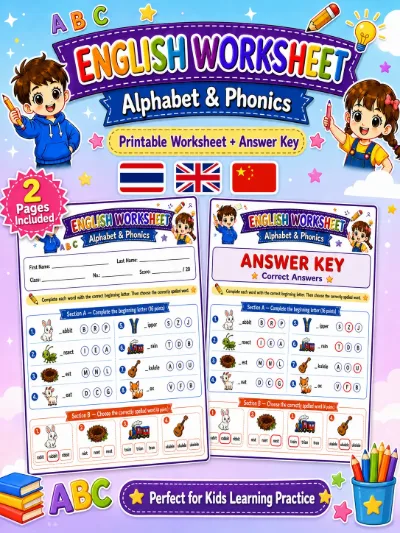
Grades 1–3 (P.1–P.3)
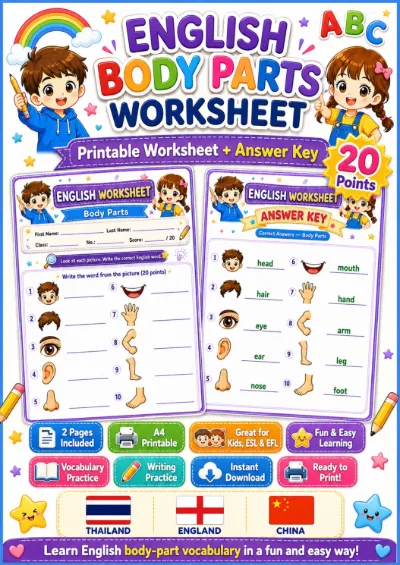
Grades 1–3 (P.1–P.3)
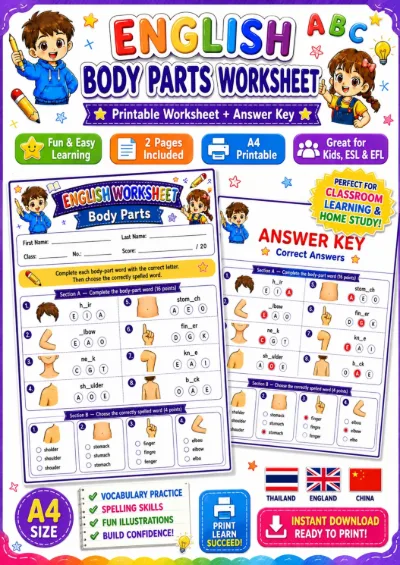
Grades 1–3 (P.1–P.3)
 Matching
EnglishGrade 14 rounds
 Multiple choice
EnglishGrade 16 questions
 Sorting
EnglishGrade 14 rounds
 Ordering
EnglishGrade 14 rounds