
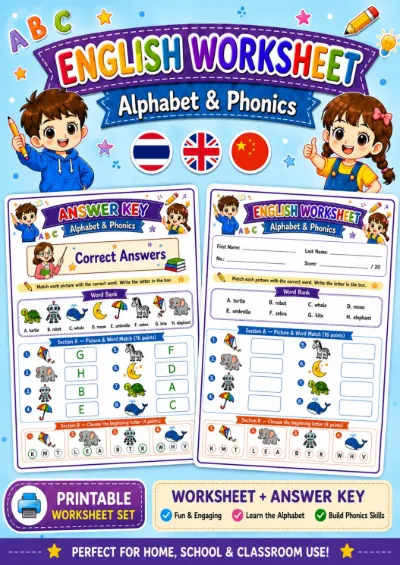
Grades 1–3 (P.1–P.3)
Alphabet & Phonics - Picture and Word Match
19 Baht
View detailsEnglish
An AR classroom game for Grade 3. Learners can aim with their hands at the camera or play by tapping the screen.
This set has 4 rounds in an interactive sorting activity.
Curriculum indicatorต 1.1 ป.3/1
A look before you play
A few real prompts from the game to help you choose an activity for your class.
Sort into
A word starting with a vowel sound takes "an".
Sort into
Separate feeling words from weather words.
Sort into
Pronouns for the speaker and for other people.
Before you play
Sort words by their first sound (vowel or consonant, which decides a or an), feelings vs weather words, pronouns, and statements vs negatives.
4 questions, sorting into 2 groups - egg, orange start with a vowel sound; book, table with a consonant sound - happy, sad are feelings; rainy, sunny are weather - I, we for yourself; he, they for other people - I like fish. vs I do not like fish. as statement and negative
A 5-minute mixed review in teams. For Q1, teams say an egg, a book aloud before dragging so they can hear the difference. - For Q4, children find not in each sentence and point to it on screen - For Q3, explain that we includes me, so it goes with yourself - Play it linked to your class so scores go into the gradebook
- orange (Q1): Thai children write its first sound with อ, which is a consonant letter in Thai, and so may class it as a consonant. Explain that o is a vowel in English - we (Q3): dragged to other people because it means more than one - they (Q3): some hesitate because the game's explanation mentions the listener, yet there is no you in the groups
Grades 1–3 (P.1–P.3)
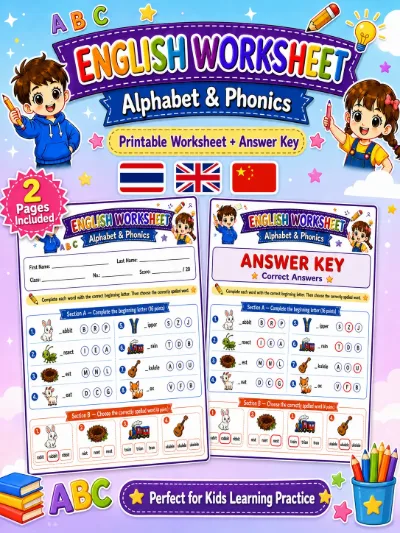
Grades 1–3 (P.1–P.3)
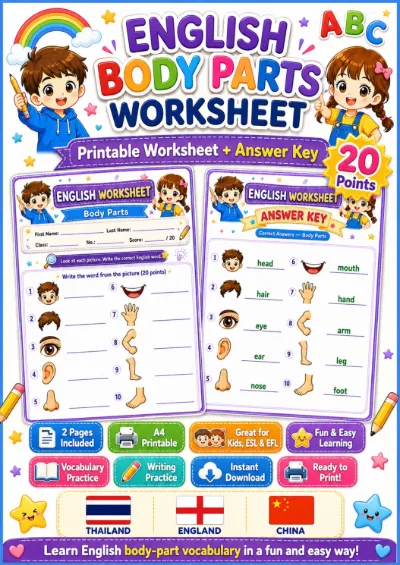
Grades 1–3 (P.1–P.3)
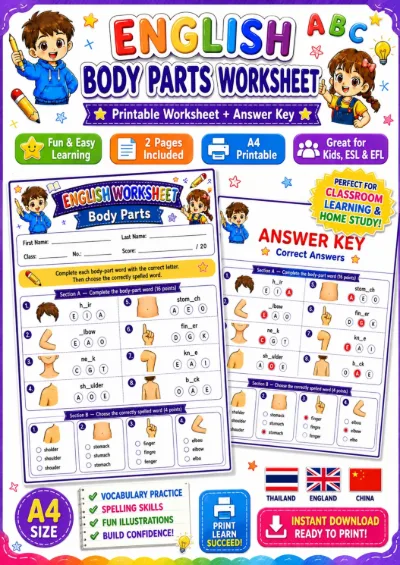
Grades 1–3 (P.1–P.3)
 Matching
EnglishGrade 14 rounds
 Multiple choice
EnglishGrade 16 questions
 Sorting
EnglishGrade 14 rounds
 Ordering
EnglishGrade 14 rounds