

After the October break, semester 2 at most Thai schools opens around early November, with the exact date set by each school and its authority. On the first day back, teachers usually meet two things at once: children have forgotten the classroom routines, and they have forgotten some of what they learned in semester 1. Both are normal.
The two common responses are to start the new unit straight away for fear of running out of time, or to review the whole book and lose half a month. This plan sits in between. It uses the first ten school days to reset routines, find out what children have actually forgotten, and review only what semester 2 builds on, with new content starting in the second week.
Three principles before you plan
- Review only what semester 2 needs: if Grade 2 will learn multiplication in semester 2, the foundation to secure is repeated addition and skip counting, not everything from semester 1.
- Check before you teach: you sense the class has forgotten things, but not who has forgotten what. One lesson spent finding out saves time reviewing things children still remember.
- Short and daily: 10 to 15 minutes of review at the start of each lesson for two weeks works better than three full lessons of review in a row.
Days 1 and 2: reset routines before content
Children who have been away for weeks forget more than content; they forget what happens when in this room. Spend the first two days teaching routines as deliberately as on the first day of the year: the signal for quiet, getting out and putting away materials, handing in work, and what to do when you finish early. Practise them several times rather than just explaining.
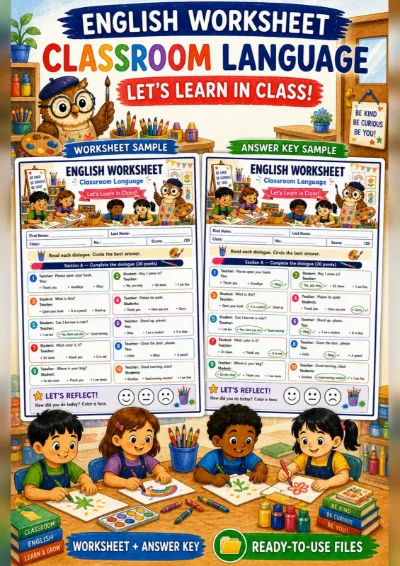
In Grade 1 to 3 English, this is a good moment to revisit classroom phrases such as May I go to the toilet? and I don't understand. The classroom language worksheet, where children read a dialogue and choose the best reply, makes a good end to the lesson. In Grades 4 to 6, have children tell you about the holiday in a few English sentences using regular past verbs: I visited my grandmother. I played football. I watched a film. If a child wants to use went or ate, accept it and explain that these verbs change form in their own way. The Past Simple regular verbs worksheet gives follow-up practice.
Days 3 to 5: an ungraded baseline check
Give a short check of 8 to 10 questions per subject, taking no more than half a lesson. Tell children clearly that there are no marks and you just want to know where to help. Make each question test one skill, so you can tell why a child got it wrong. Example maths questions by grade:
- Grade 1: adding and subtracting within 20, including bridging ten, such as 8 + 5 and 13 - 5
- Grade 2: addition and subtraction with carrying and borrowing, such as 36 + 27 and 74 - 39
- Grade 3: times tables and division, such as 8 x 4 and 63 ÷ 9
- Grades 4 to 6: pick from the units semester 2 builds on; if semester 2 introduces decimals, check fractions and place value first
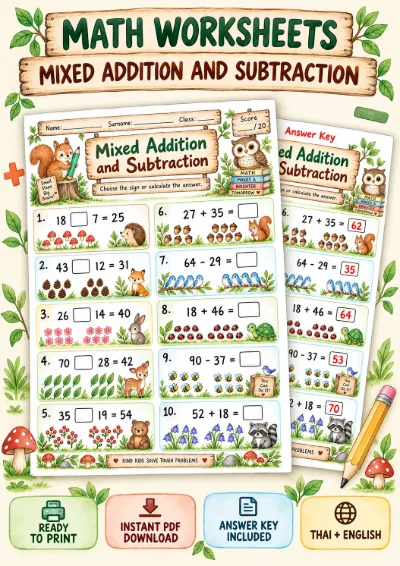
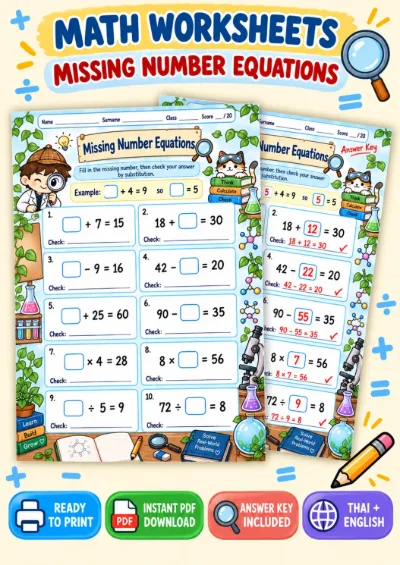
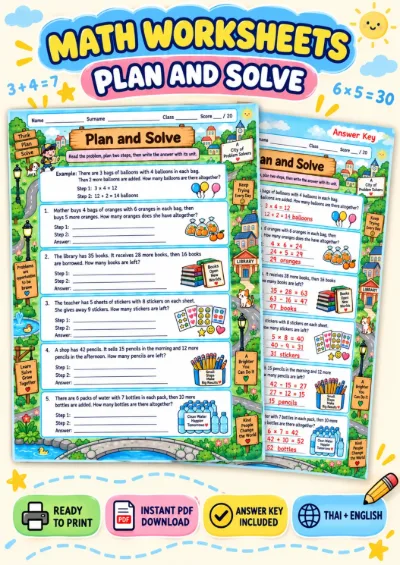
Include at least one missing-number question, such as 15 = 9 + ?. A child who thinks the equals sign means "the answer is" cannot do it, even if they can add. The missing number worksheet and the mixed addition and subtraction worksheet, where children choose the sign, work as ready-made checks for Grades 1 to 3. From Grade 3 up, the multi-step word problems worksheet shows whether children can still plan a solution.
For Grade 1 to 3 English, have children write or choose 8 words from semester 1 topics from pictures and read 2 short sentences. For Grades 4 to 6, have them write 4 or 5 sentences about the holiday. One piece of writing shows vocabulary, word order and verb use at once.
When marking, skip the total score. Make a grid of names against skills and use three marks: can do, partly, not yet. The grid shows which skills need reteaching to the whole class and which only some groups need help with.
Days 6 to 10: review in groups
In week two, new content can start, but keep the first 10 to 15 minutes of each lesson for review, in two parts.
- 5 minutes whole class: reteach the skill the grid shows most children cannot yet do, using a different approach, not the same explanation more slowly.
- 10 minutes in groups: the not-yet group works with you using objects or pictures, the partly group practises with a worksheet, and the can-do group takes a challenge problem or helps check a partner's work.
- End of the week: a three-question exit ticket on the same skills to see who can move groups. Children who still cannot do it after two weeks need ongoing help through the semester, not the same review again.
A five-minute AR warm-up
At the start of lessons in these two weeks, a short review game wins attention back quickly. The AR library has maths review sets for each grade, such as "Grade 2 maths: regrouping and times tables", with questions like 36 + 27 and 5 x 8, or "Grade 3 maths: × ÷, fractions and time". Each has 6 questions and fits in five minutes.
One caution: the review set for the current grade may include topics not yet taught in semester 1. Look through it first, and if it has questions the class has not met, use the previous grade's set instead, which suits a baseline check anyway. Played in Classroom Mode, the end-of-game summary shows how many children got each question right or wrong, which you can compare with your skills grid to see whether the class as a whole is improving. The summary is not broken down by child, so checking individuals still needs a worksheet or an exit ticket.
Common mistakes at the start of term
- Reviewing the whole book: children are bored in week one, and what they have really forgotten gets lost among what they still remember.
- Turning the check into a test: children who have forgotten things start the new semester feeling they have failed, when the aim was to find where to help.
- Reviewing the same way for everyone: children who remember waste time, and children who forgot a lot still cannot keep up.
- Forgetting routines: the content is right, but the room is too unsettled to teach because routines were not practised in the first two days.
For parents
In the last week of the break, moving bedtime back to school-term hours helps more than cramming exercises. Ask your child what they enjoyed or found hard last semester, without turning it into a test. If the teacher sends home the baseline results, read them as a map of where your child needs practice, not as a score, since a check at this point is meant to show what is not yet secure.
Worksheets from this article
Grades 1–3 (P.1–P.3)
Mixed Addition and Subtraction - Choose the Sign
Grades 1–3 (P.1–P.3)
Missing Number Equations - Solve and Check
Grades 1–3 (P.1–P.3)
Multi-step Word Problems - Plan and Solve
Grades 1–3 (P.1–P.3)
Classroom Language - Read the Classroom Dialogue and Circle the Best Reply
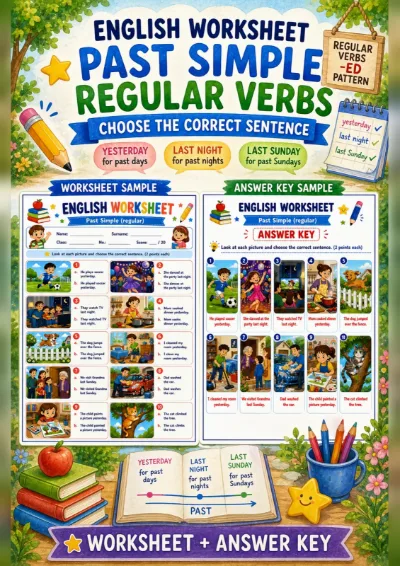
Grades 4–6 (P.4–P.6)