
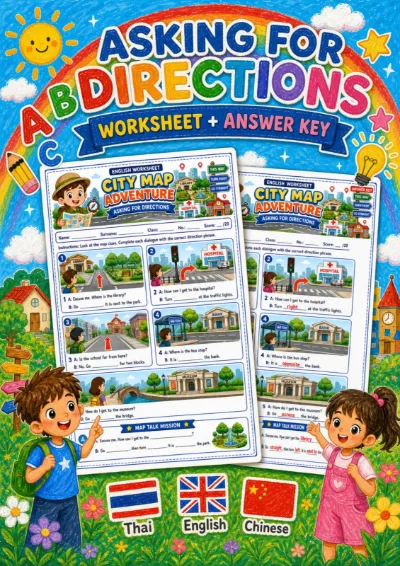
Grades 4–6 (P.4–P.6)
Asking for directions worksheet
19 Baht
View detailsEnglish
An AR classroom game for Grade 5. Learners can aim with their hands at the camera or play by tapping the screen.
This set has 4 rounds in an interactive sorting activity.
Curriculum indicatorต 1.1 ป.5/4
A look before you play
A few real prompts from the game to help you choose an activity for your class.
Sort into
Some answers sit in the passage; others you have to work out.
Sort into
A linking word says whether what follows adds to or argues against what came before.
Sort into
A fact can be checked; an opinion is the writer's own view.
Before you play
Practise skills used when reading a short text for meaning (ต 1.1 ป.5/4): telling find-it questions from think-about-it questions, adding from contrasting links, fact from opinion, and sequence words from place words.
4 sorting questions - What is his name? versus Why did he do that? - and and also add; but and however contrast - Bangkok is in Thailand. versus Bangkok is the best city. - first and then show order; here and there say where
Play before pupils read a short text from the coursebook, to prepare reading strategies. 5 minutes in team mode. - After item 1, read a real paragraph and ask both kinds of question - For item 3, ask which sentence a map can check and which one people would disagree about - Then have pupils spot first, then and but in the text Play it linked to a class and the results go into the mark book.
- Item 1: putting How does he feel? with find-it questions, since some texts say he was happy outright; explain that feelings usually have to be worked out from actions - Item 3: calling English is easy. a fact if the pupil finds English easy; ask whether everyone would agree - Item 4: hesitating over here and there, which they rarely notice as place words in a story
Grades 4–6 (P.4–P.6)
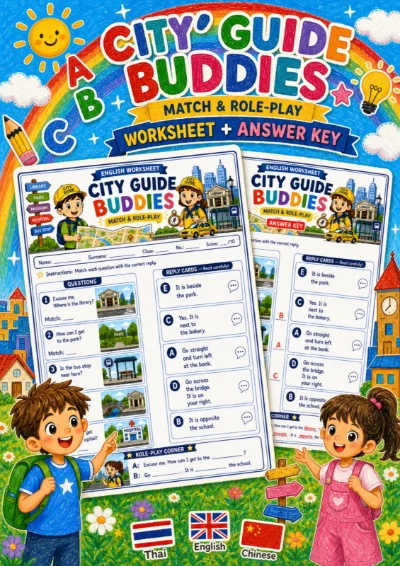
Grades 4–6 (P.4–P.6)
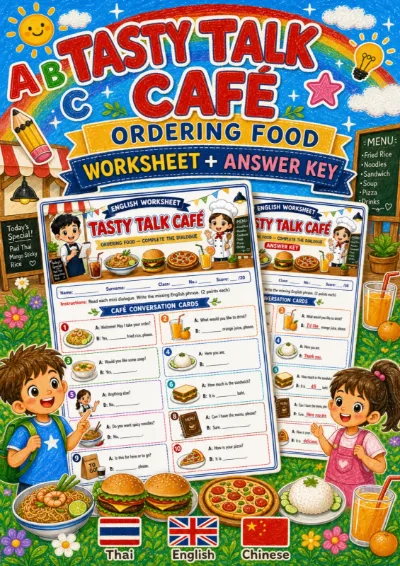
Grades 4–6 (P.4–P.6)
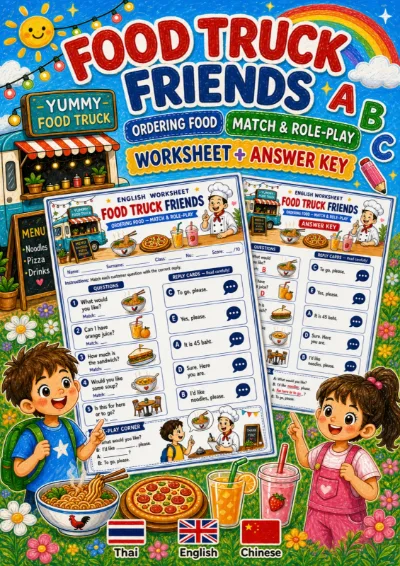
Grades 4–6 (P.4–P.6)
 Matching
EnglishGrade 14 rounds
 Multiple choice
EnglishGrade 16 questions
 Sorting
EnglishGrade 14 rounds
 Ordering
EnglishGrade 14 rounds